 ChatGPT
 Google AI
 Claude
 Perplexity
Swiggy Instamart vs. Your Own Instagram Store: What Actually Works for Early-Stage F&B Brands
Updated on
May 29, 2026
May 29, 2026
Read summarized version with
Social media marketing is It is no longer a study playground. It has matured. It has sharpened. And in 2026, it will become a precision-driven growth engine where every click matters. Every scroll counts. Every interaction carries measurable value.
Brands are not just looking for visibility anymore. That phase is gone. They want velocity. Faster movement. They want conversion. Real numbers. Real outcomes. They want momentum that builds. Slowly at first. Then all at once. This shift has forced social media marketing agencies to evolve. Not just content creators now. More like performance architects. Designing systems. Not just posts.
The landscape is changing fast. Almost too fast sometimes. Subtle shifts. Then sudden disruptions. You notice one thing working today, gone tomorrow. Some trends are already visible beneath the surface. Quiet. Almost invisible. But gaining traction. And then suddenly, everywhere.
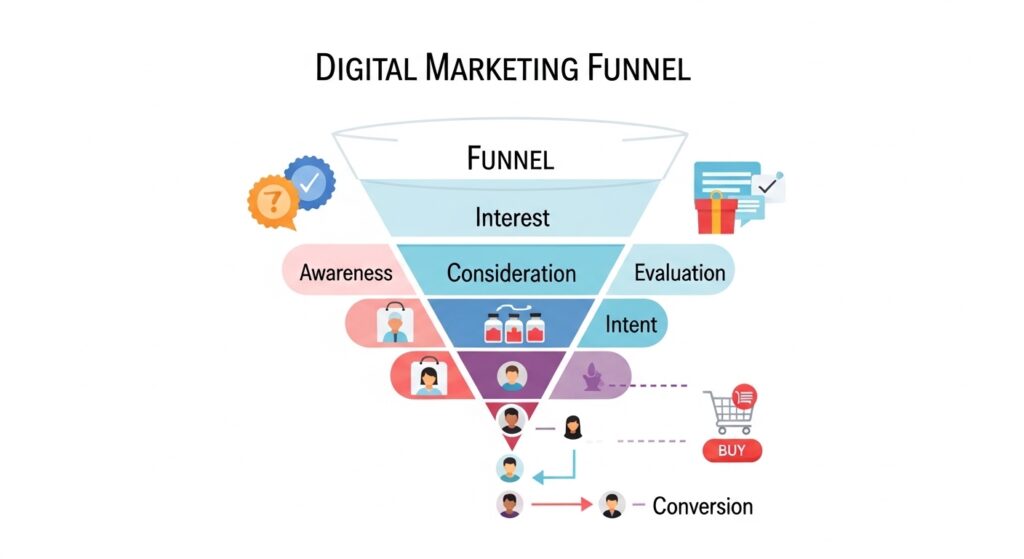
Vanity metrics are becoming a thing of the past. No longer are likes and shares considered a badge of honor. In 2026, marketing agencies will be defined by what they generate, not what they post.
This is all being driven by a new form of marketing, a performance-driven marketing. Marketing campaigns are being built with precision, intent, and purpose. Every asset has a purpose, and every funnel is being optimized.
Marketing agencies are looking for ways to deeply integrate paid, conversion, and behavioral analytics to ensure that social media has a direct impact on the revenue stream.
Artificial intelligence is no longer an accessory. We have to use this as partern and not something you just plug in. It is becoming the central nervous system of social media marketing. Quietly running in the background. Making decisions. Learning fast about the tools and agencies that are leveraging AI to predict user behavior and engagement rate for which content, automate workflows, and refine targeting with almost unsettling accuracy. Feels precise. Almost too precise sometimes.
This shift is not about replacing creativity. That’s a common fear. But not true. It is about amplifying it. Stretching it further. AI handles the repetitive layers. The heavy lifting. The boring parts. Allowing strategists to focus on ideation and storytelling. The part that actually connects.
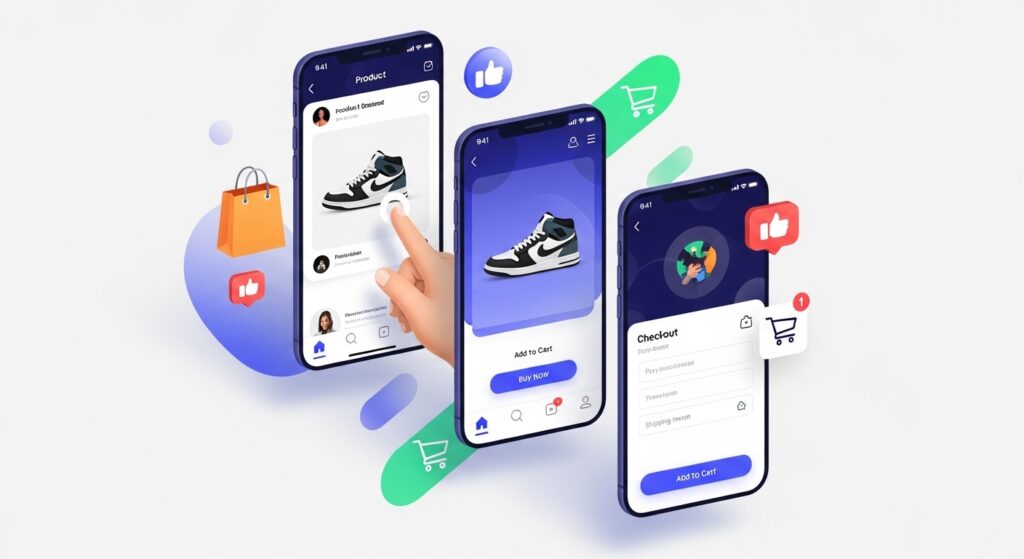
The idea of social commerce is no longer futuristic because the improvement of the purchasing product is a lot improved. It is happening now, and it is growing at an aggressive pace into 2026. Users are noticing the brand through trust and visuals. The traditional model of awareness, consideration, and conversion is now merging into one experience. People are scrolling, consuming, and buying within minutes. They are not being redirected. They are not being influenced. They are simply moving from intent to action.
The social media marketing agencies are creating micro-moments of consumer behaviour. From Shoppable Reels to Live Selling, everything is being optimized for reduced friction and increased buying behaviour. The platforms are evolving and increasing user-friendliness, but more importantly, consumer psychology is evolving alongside. Convenience is king of the market and has been in demand.
| Social Commerce Element | Average Conversion Rate | Engagement Boost | Revenue Impact Increase |
| Shoppable Posts | 3.5% – 5.2% | +28% | +18% |
| Live Commerce Streams | 7.8% – 12.4% | +45% | +32% |
| In App Checkout | 5.1% – 8.6% | +22% | +25% |
| Influencer Storefronts | 4.3% – 6.9% | +35% | +27% |
| Product Tagging | 2.9% – 4.7% | +19% | +15% |
The dominance of short-form video is further increasing. The attention span of the audience is decreasing, but the engagement is increasing through the right format of content creation.
Entire strategies are being developed around “reels,” “shorts,” and “quick visual storytelling.” These are not random uploads. These are highly structured content ecosystems being developed to take the user through a journey of awareness and conversion.
Mass messaging is losing its charm. Slowly. Then suddenly. Audiences expect relevance now. Not generic noise. Something that feels made for them. Not for everyone scrolling. Content that feels tailored. Almost intimate. It understands them a bit too well. Marketing agencies are noticing this shift. Watching closely. And adapting fast.
Now the influencer ecosystem is changing. Quiet recalibration is happening in the background. Mega influencers are no longer the default choice. Too broad. Too diluted. Instead, agencies are focusing on micro and nano-influencers. Smaller audiences, yes. But stronger connections. Deeper trust. More real conversations are happening there.
Marketing agencies are now changing their approach to the brand and users’ behavior, and then collecting data based on this, creating campaigns, preferences, and interaction history. Layering this with influencer collaborations that feel natural. Not scripted. Not forced. It flows better. This creates a sense of connection. Real connection. Something generic campaigns simply cannot replicate.
However, a quiet revolution is underway. Not loud. Not obvious at first. Content is not being created for social media anymore. It’s being created within the logic of the platform itself. Subtle shift. Big impact. Social media marketing agencies are moving away from generic and old-faced content and moving to the present, trendy, surface-level, one-size-fits-all creatives. That approach feels outdated now. Instead, they are building native platform ecosystems. Content that feels organic. Intuitive. Almost invisible to the user. You don’t notice it as marketing. And that’s the point.
Each platform has its own rhythm. Its own behavioral cues. Almost like its own language. What works on Instagram could fail on LinkedIn. Completely. What succeeds on YouTube Shorts could fail on Insta Reels. No guarantee. Agencies are slowly cracking this code. Testing. Failing. Learning again. And creating content that blends into the user’s feed. Not interrupting. Just fitting in.
This is a quiet revolution. But incredibly potent. It increases watch times. Boosts engagement. Builds trust without pushing too hard. No aggressive persuasion. Over time, something interesting happens. Brands don’t feel like brands anymore. They feel like native participants in digital discourse. Almost like they belong there.
The direction in which social media marketing agencies are headed in 2026 is clear: performance, personalization, and precision are the future of the industry.
Agencies that embrace these trends are not only going to make it; they are going to dominate the market. Agencies that fail to adapt will become irrelevant.
The future belongs to agencies that can prove to have creativity with performance and proper on-time results, storytelling with strategy, and innovation with execution.
Social media is no longer a marketing tool, and it’s common for the use of research. It’s a business growth tool for all brands to improve their authority. And the agencies leading the charge are rewriting the rules in real-time.