 ChatGPT
 Google AI
 Claude
 Perplexity
How Much Does a Pharma Website Development Cost in India? (A Realistic Breakdown)
Updated on
May 27, 2026
May 27, 2026
Read summarized version with
Now you’ve made a good product. You’ve figured out your recipes, packaging and possibly even managed to get some initial traction by mouth-of-mouth referrals. And now you’re at that stage where you have to ask yourself the crucial question:
“Where do I actually sell this – and how do I grow from here?”
From my experience, most early-stage F&B founders in India focus on one of two marketing avenues: Swiggy Instamart or social media on platforms like Instagram and YouTube. There’s nothing wrong with doing either. However, what most entrepreneurs fail to understand is the purpose behind each of these channels.
In this post, we break down both channels using real founder examples, so you can make a smarter decision about where to put your energy and budget.
Let’s start with the obvious benefit. Swiggy Instamart lets you target millions of potential customers looking to place an order on the app right away with their wallets open. You don’t have to do anything extra to make sure people know about your product or service.
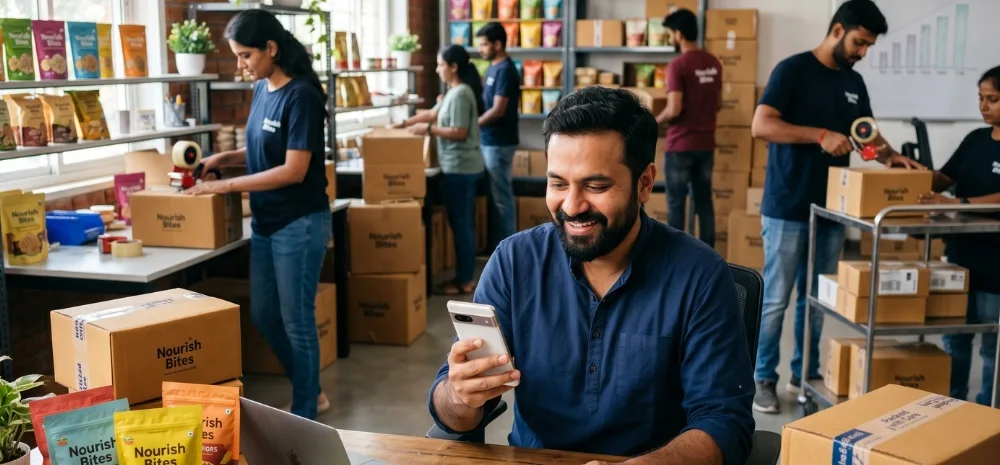
Real Example: How a packaged snacks brand achieved 500 orders
A Pune-based startup founder, offering millet-based trail mixes pack, launched their health-conscious consumer products on the Instamart platform towards the beginning of 2023. In just 6 weeks, he managed to achieve over 500 orders through organic reach on the platform alone. He didn’t even have a single social media account! no marketing budget and no prior digital experience. Instamart did the heavy lifting.
What worked in their favour:
Here’s what the founder told us six months later: “I have absolutely no idea who my customers are. I cannot connect with them. I cannot tell them about my new flavor/new product and my margins are being killed.”
The hard truths about Instamart:
Instagram is not just a social media network; it serves as a complete funnel for sales for D2C food brands. Everything from customer discovery to engagement, conversion to retention can be accomplished on this single platform alone.
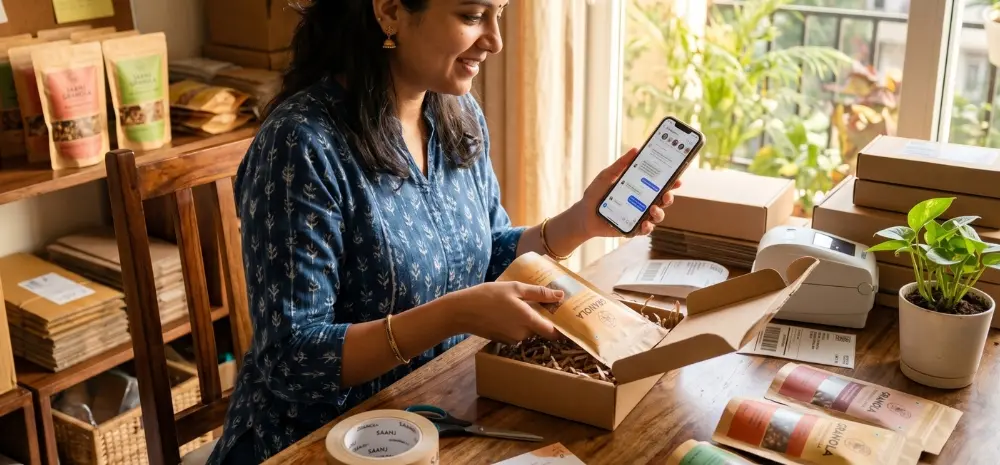
Real Example: Homemade granola brand scaled to ₹2L/month through Instagram DMs
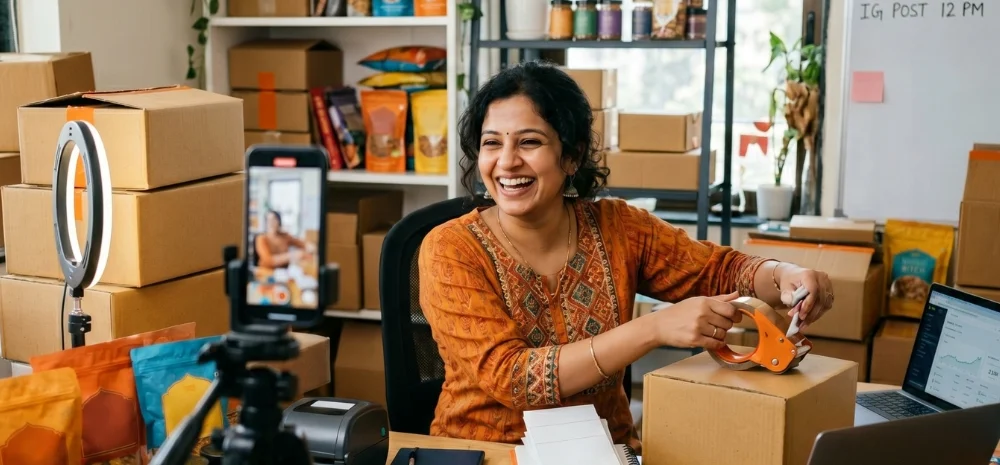
In 2022, a home-baked granola brand from Chennai was launched with absolutely no spend on advertising. The founder made 3-5 reels every week showing her morning routine, recipes and packing process, prompting their followers to direct message them for orders. By month 4, she was doing ₹2 lakh/month in Chennai and had 80% repeat customer retention rates.
What made it work:
Instagram success does not come overnight. In fact, the granola founder of Insta Growth Secrets took 3 months of continuous posting to get her first 100 followers on Instagram.
It took consistent effort, creative energy and a willingness to be on camera.
Challenges that need to be addressed honestly:
| Factor | Swiggy Instamart | Instagram Store |
| Setup Speed | Fast (1–2 weeks) | Medium (2–4 weeks) |
| Customer Data Ownership | None | Full ownership |
| Commission / Fees | 18–30% | 0–5% (payment gateway) |
| Brand Control | Low | High |
| Repeat Purchase Driver | Platform algorithm | Relationship-driven |
| Discovery Potential | Very High | Medium (content-dependent) |
| Best For | Volume & validation | Loyalty & margins |
The key point that gets missed in most channel comparison posts is not whether one is better than the other but which channel you need first and why.
Consider Instamart to be the “discovery engine” and Instagram to be the “loyalty engine.” You need both, but in the proper sequence.
What do you need in the early days? You need validation and cash flow; you need proof that your product can sell itself. This is what Instamart will give you easily and instantly without having to build up your audience first.
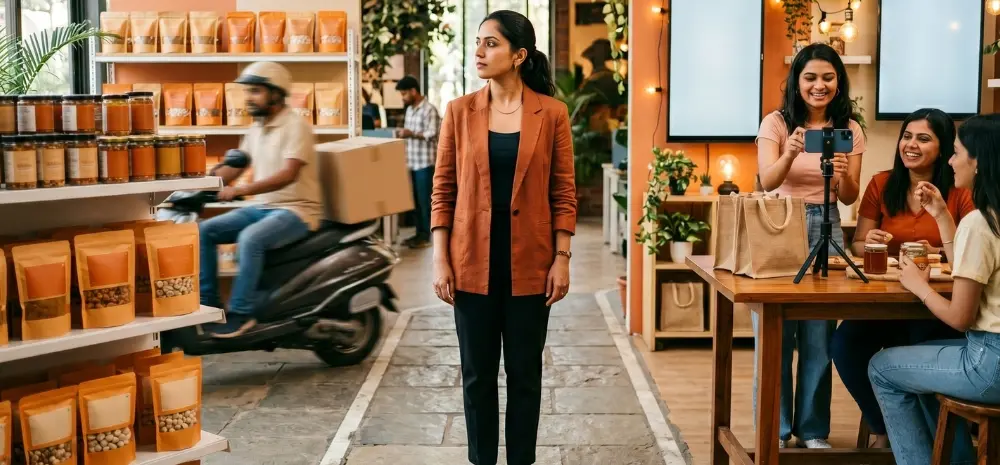
But here’s the trap: however, if you continue to depend upon Instamart forever, you will develop a product business but never a brand business. You would have a customer base, but they would be the Swiggy audience, not your audience. You will continue to operate at low margins. Plus, there will be absolutely no way for you to communicate with your customers.
This is what Instagram – and your channel, in general – will help you do. This is how you’ll be in control of the relationship. This is how you’ll develop a brand that fans are loyal to rather than simply a product that comes up in searches.
Here’s the sequence we recommend to most early-stage food brands:
Platforms like Swiggy Instamart help you achieve reach. But your own channels help you grow a business.
The best founders that we have worked with do not pick between the two. They leverage platforms for visibility but consistently drive their customers to their own channels. That’s how you build a brand that compounds over time – instead of renting attention from a platform indefinitely.
“Get started with Instamart for scale. Develop Instagram for loyalty. Connect the two via packaging.”
If you’re still at the beginner level, you shouldn’t be intimidated by this complexity of processes. Just choose one platform, do a great job there for 30 days, and gather insights from it.
Do you want to boost your sales, grow your reach, or even improve your brand identity? The Creativenuts experts have got you covered!
Submit your inquiry through our contact form below.