 ChatGPT
 Google AI
 Claude
 Perplexity
Swiggy Instamart vs. Your Own Instagram Store: What Actually Works for Early-Stage F&B Brands
Updated on
May 29, 2026
May 29, 2026
Read summarized version with
The global nutraceutical industry is expected to exceed $1.1 trillion by 2032. Yet, many supplement brands continue to find themselves unable to capitalize on their social media following and generate tangible revenue from it. The reason for this is usually not poor product quality but ineffective social media marketing strategies.
Today’s consumers conduct thorough research prior to making any purchases. They browse Instagram feeds, watch YouTube tutorials, consult reviews, compare the list of ingredients and follow wellness bloggers before purchasing any products, which is the first step that all are following. Thus, it has become crucial for nutraceutical and supplement brands to implement effective social media marketing campaigns in 2026.
At Creativenuts, we have found that successful brands within the supplement industry prioritise mainly education, establishing trust, community building, and performance-driven content marketing over simply putting up promotional creatives.
Here are some of the most effective social media marketing approaches nutraceutical brands should pursue in 2026.
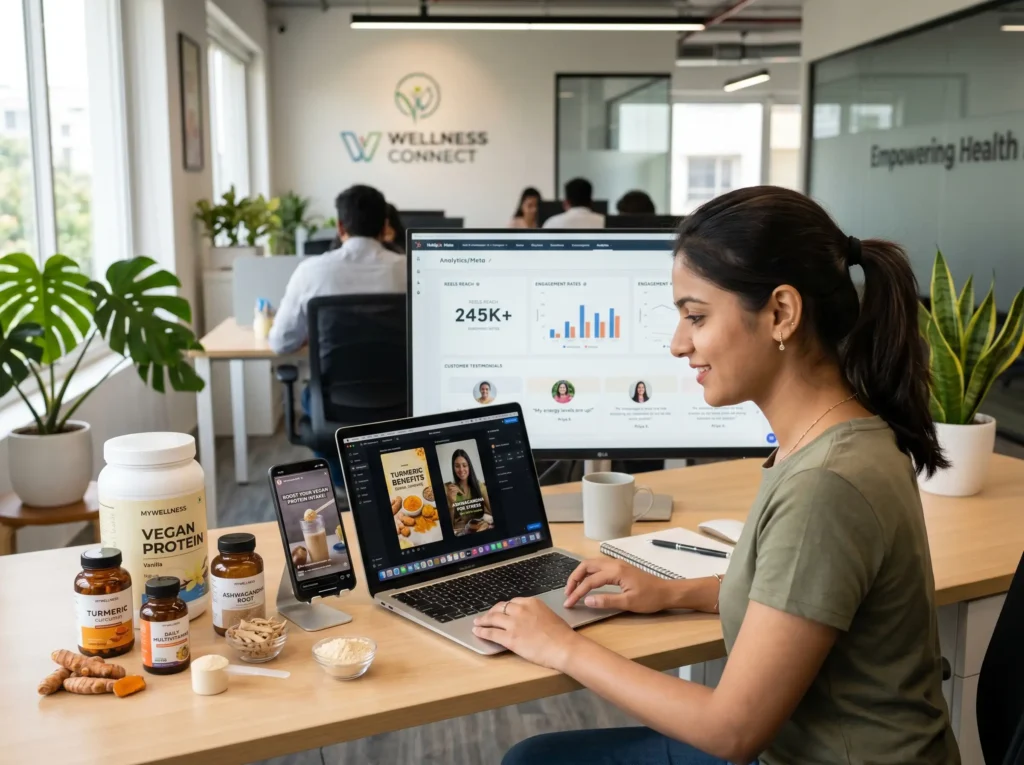
Supplements are one of the skeptical categories. People have natural doubts regarding the health and wellness of any particular product. This indicates that marketing solely through promotional material is not an option for businesses.
The first goal of social media marketing should be building trust and credibility.
Informational or educational posts allow consumers to learn about the product ingredients, benefits of the products and wellness goals before they are encouraged to make a purchase. Companies that provide continuous information to their audiences tend to develop better engagement and loyalty.
First, post short form “ingredient spotlight” videos highlighting one ingredient every week before implementing a major campaign. The purpose of this strategy is to make consumers familiar with the product and also provide evergreen retargeting assets to be used in future ads.
Consumers are more likely to purchase supplements from companies that seem genuine and knowledgeable about their ingredients.
Instagram works best for:
It continues to be one of the highest-performing platforms for direct-to-consumer supplement brands.
YouTube is highly effective for long-form educational content such as:
It also supports long-term search visibility through video SEO.
Facebook still delivers strong results for:
Choosing the right platform strategy improves engagement, conversions, and marketing ROI.
User-generated content (UGC) has always shown superior performance compared to brand-intensive ads in the supplements market due to the increased credibility of authentic user experiences over professionally shot ads.
However, a successful UGC campaign needs structure and consistency.
Successful supplement brands actively encourage customers to share:
UGC not only increase credibility, but it also enhances click-through rate and conversion performance within any paid advertising efforts.
Customer-based content can often become one of the most valuable resources for social media advertising.
Influencer marketing continues to be a very efficient approach to promote nutraceutical products and dietary supplements, specifically when collaborating with micro-influencers rather than big celebrities.
The following reasons make micro-influencers more trustworthy in the context of health and wellness:
Health-conscious consumers prefer creators who genuinely discuss:
The best collaborations for influencers result from those creators whose core values match those of the brand itself.
Influencer-generated content can also be repurposed for paid campaigns, landing pages, and retargeting ads.
Compliance is crucial in the marketing of nutraceuticals and supplements. Platforms such as Meta and Google have stringent rules and regulations regarding the advertisement of health products.
Brands should avoid:
Instead, focus on:
A compliance-friendly strategy protects brand reputation and reduces the risk of ad disapprovals, account restrictions, or policy violations.
The nutraceutical brands succeeding through social media are not necessarily those with the largest budgets – they are the ones with the best strategy.
Creating trust, developing educational content, using UGC properly, collaborating with reputable influencers and consistently testing marketing campaigns are among the most efficient means to improve your performance on social media platforms.
As consumer behaviour becomes more frequently changing, supplement brands should be aware of the necessity for a combined approach, which includes both branding and performance marketing through social media.
At Creativenuts, a successful nutraceutical social media strategy should involve not only increasing visibility but also establishing trust and sustainable growth of your business.